




Table of Contents
- Introduction
- Who built KIMI k3 and why open weight matters
- Architecture how KIMI k3 uses MoE for efficiency
- Benchmark performance how KIMI k3 competes globally
- Licensing, deployment and what open actually means
- How KIMI k3 compares to DeepSeek V3 and Llama 3
- Real world use cases where KIMI k3 truly shines
- Conclusions
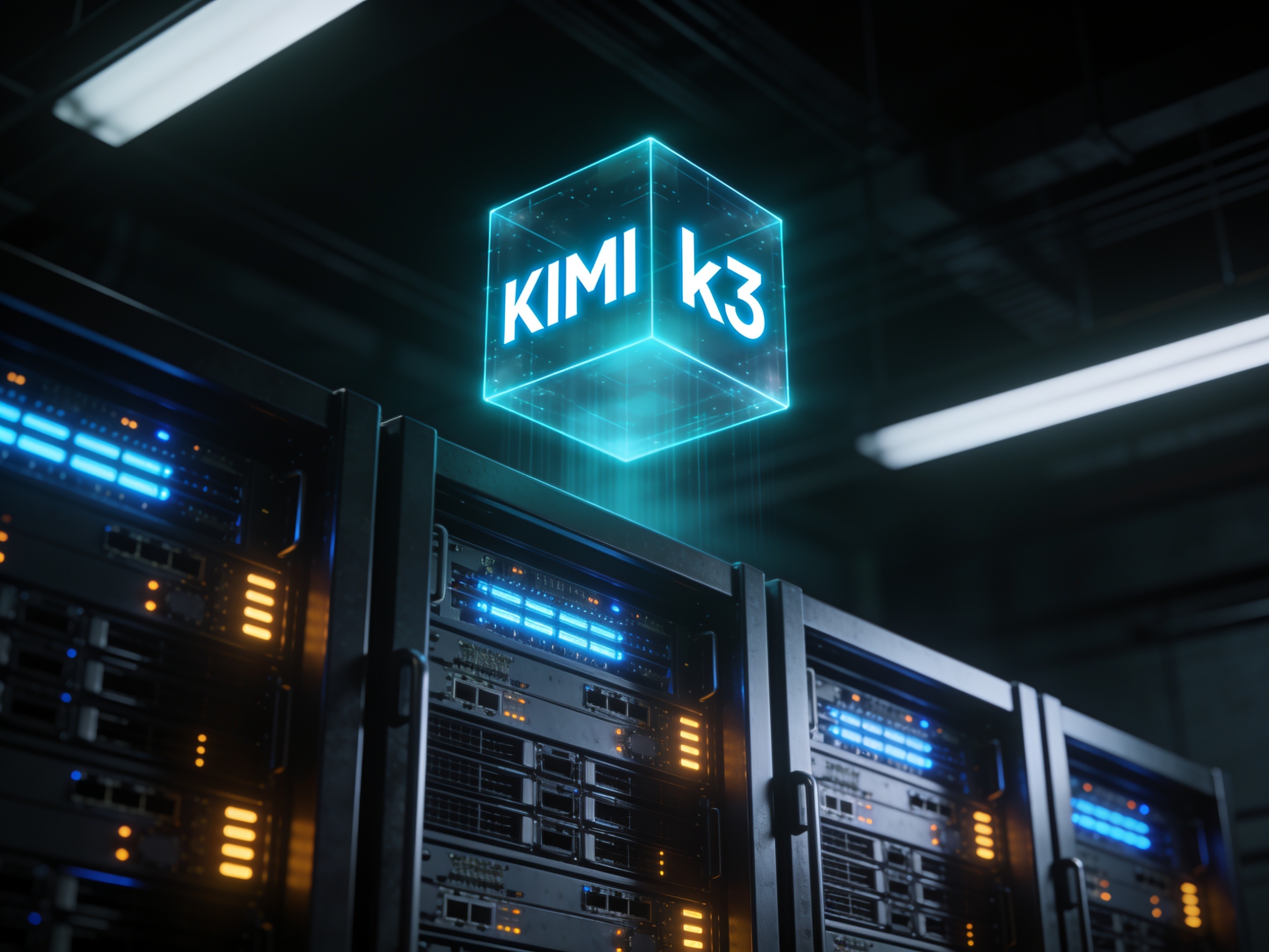
The KIMI k3 is the latest open weight large language model from Moonshot AI, a Beijing based AI company known for its record breaking long context processing. Released as an open weight model, the k3 challenges assumptions about Chinese AI and open source innovation. This article explains the architecture, performance, trade offs and real world potential of KIMI k3.
Who built KIMI k3 and why open weight matters
Moonshot AI is a Beijing based startup founded in 2023 by Zhilin Yang and others. The company gained attention for launching Kimi, a Chinese chatbot capable of handling extremely long contexts up to 2 million tokens. The KIMI k3 is their first large open weight model, released in 2025. Open weight means the trained model parameters are publicly available for download, modification and fine tuning, though training data and training code may not be disclosed. This positions KIMI k3 as a serious competitor to Meta Llama, Mistral and Qwen in the open ecosystem. Moonshot AI has not published a full technical report, which leaves some architectural details inferred from benchmarks and documentation. The company focuses on long context capabilities and efficient inference, both central to the k3 design. The open weight release is significant because it allows developers worldwide to deploy the model on their own infrastructure, run local inference and fine tune for specific tasks without API dependency.
Architecture how KIMI k3 uses MoE for efficiency
KIMI k3 is built on a Mixture of Experts (MoE) architecture. Instead of activating all parameters for every token, MoE divides the model into multiple expert networks. A special router network decides which experts to activate for each input, dramatically reducing computation while keeping high capacity. KIMI k3 has a total of 256 experts with top 2 routing, meaning only two experts are activated per token. This results in 685 billion total parameters but only 37 billion active parameters per forward pass. The active parameter count is roughly comparable to dense models like Llama 3 70B but with more total knowledge stored across experts. The model uses a Transformer decoder architecture with improvements: 8 key value attention heads for grouped query attention, SwiGLU activation, RoPE position encoding and a very large vocabulary of 256,000 tokens. The context window reaches an impressive 128,000 tokens, shorter than some Moonshot products but still state of the art for open models. This design balances quality, speed and memory requirements.
Benchmark performance how KIMI k3 competes globally
Moonshot AI published benchmark results showing KIMI k3 matching or exceeding models like DeepSeek V2, Llama 3.1 70B and Qwen 2.5 72B across multiple tasks. On the MMLU benchmark, k3 scores very close to leading models. In mathematics with Math and GSM8K, results are competitive. On coding benchmarks including HumanEval, MBPP and LiveCodeBench, KIMI k3 shows strong performance for a MoE model of its size. The long context evaluation in RULER shows the model handling up to 128k tokens reliably, though performance slightly degrades beyond 64k. Independent reviewers have noted that KIMI k3 performs particularly well on Chinese language tasks and structured reasoning. On English benchmarks, it is broadly comparable to Llama 3 70B but may lag slightly on specialized Western datasets. The model is competitive with GPT 4 on some reasoning tasks, especially when used with chain of thought prompting. These results establish KIMI k3 as a top tier open weight model, particularly strong in multilingual and long context scenarios.
Licensing, deployment and what open actually means
KIMI k3 is distributed under the Kimi Model License, which allows most commercial and research uses. The license requires attribution and approval from Moonshot AI for certain high risk or competitive applications. It is more permissive than Qwen license terms but less open than Apache 2.0 used by Llama. Developers must agree to use the model responsibly without generating illegal, discriminatory or harmful content. The model weights are available on Hugging Face and via direct download. Deployment using vLLM, llama.cpp, Ollama and Transformers is supported. The 37B active parameters mean KIMI k3 can run on a single A100 80GB GPU or two RTX 4090 GPUs with quantization. FP8 inference is available for lower memory usage. For enterprise use, the model works with SageMaker, Kubernetes and on premises GPU clusters. Moonshot AI also provides an API for cloud inference. The openness level allows fine tuning with LoRa, QLoRa and full parameter training. However, training data, intermediate checkpoints and training code are not released, limiting reproducibility.
How KIMI k3 compares to DeepSeek V3 and Llama 3
KIMI k3 occupies an interesting middle ground. DeepSeek V3 also uses MoE with 671B total and 37B active parameters but with 256 experts and significantly higher total compute. DeepSeek V3 has a larger training budget and slightly better benchmark scores across the board, especially on math and code. However, KIMI k3 is easier to deploy due to lower total memory if loaded partially. Llama 3.1 70B is a dense model with similar inference cost but different trade offs: it uses 70B active parameters always, making it less efficient but potentially more consistent on certain tasks. Qwen 2.5 72B is another strong open Chinese model with dense architecture. KIMI k3 matches Qwen 2.5 72B on many Chinese tasks while offering better inference efficiency. The key differentiator for KIMI k3 is its MoE efficiency with strong quality, making it suitable for budget constrained deployments. It also excels at long context and multilingual tasks thanks to the large vocabulary and specialized training strategies. For users needing the absolute highest benchmarks, DeepSeek V3 is stronger. For ease of use and ecosystem support, Llama remains dominant.
Real world use cases where KIMI k3 truly shines
KIMI k3 is optimized for several practical applications. Document understanding with 128k context makes it ideal for legal contract analysis, long report summarization, academic paper review and codebase understanding where thousands of lines must be processed at once. The model handles multilingual documents well. Coding assistants benefit from strong HumanEval and MBPP scores, and the MoE architecture means faster inference on code generation tasks compared to similarly sized dense models. Chinese language applications are a natural fit, including chatbots, content generation, translation and customer support in Chinese speaking markets. The large vocabulary supports characters efficiently. Fine tuned domain models can be created for healthcare, finance, legal and education by adding LoRa adapters. Several companies are already using k3 for specialized agent systems due to efficient deployment. Edge deployment with quantization enables running k3 on consumer hardware for privacy sensitive local use. The model also works well with retrieval augmented generation RAG for knowledge intensive tasks. For researchers, it provides a competitive baseline for studying MoE techniques and multilingual training methods.
Conclusions
KIMI k3 by Moonshot AI proves that Chinese open weight models can compete at the highest level. With 685B total parameters and 37B active, its MoE design offers an efficient balance of quality and cost. The 128k context window, strong benchmarks and permissive licensing make it a serious alternative to Llama and DeepSeek. KIMI k3 may not be the best at everything, but it represents an important step in accessible high performance AI.